Health Updates

Weekly Health Update – Jan 7, 2013

“What is called genius is the abundance of life and health.”
~ Henry David Thoreau

Mental Attitude: Cognitive Behavioral Therapy vs. Antidepressants.

Only a third of patients respond fully to antidepressant medications and there is no consensus on what to try next. In a study of 469 patients from the United Kingdom who did not fully respond to initial treatment, 235 patients again received the usual care (antidepressants) and 234 again received the usual care plus Cognitive Behavioral Therapy (CBT). CBT is a form of treatment that focuses on examining the relationships between thoughts, feelings, and behaviors to find patterns in thinking that cause negative thoughts leading to negative feelings and self-destructive behaviors. 46% of participants who received CBT as an adjunct to usual care saw improvements after 6 months compared to only 22% among those who solely used antidepressants. Those in the CBT group experienced less anxiety, were more likely to go into remission, and experienced fewer and milder symptoms than those in the other group.
The Lancet, December 2012

Health Alert: Childhood Obesity Rates Falling!

During the first decade of the 21st century, childhood obesity rates among children in lower income families in the United States have decreased (14.94% in 2010 vs. 15.21% in 2003).
The Journal of the American Medical Association, December 2012

Diet: Red Wine and Cancer.

Meat consumption increases the risk of prostate cancer. Men who consumed the most red meat had a 30% increased risk of cancer. Processed red meat was associated with a 10% increased risk of prostate cancer with every 10 grams (about one-third of an ounce) of increased intake.
University of Leicester, December 2012

Exercise: Good Vibrations.

Within 7 months of starting a poor diet, normal mice became obese, with significant damage to their immune and skeletal systems. Daily 15-minute treatments of low-intensity vibration, barely perceptible to human touch, helped restore the immune and skeletal systems of the mice towards those of mice fed a regular diet. If this effect translates to humans, it could have benefits for obese people suffering from immune problems related to their obesity.
The FASEB Journal, December 2012

Chiropractic: Quit Smoking!

Smokers suffering from spinal disorders and related back pain reported greater discomfort than those who stopped smoking during an 8 month treatment period. Patients who had never smoked and prior smokers reported significantly less back pain than current smokers and those who had quit smoking during their care.
Journal of Bone and Joint Surgery, December 2012

Wellness/Prevention: Sleep and Pain?

Sleep disorders lead to 253 million days of sick leave a year in the United States. 63.2 billion dollars are lost a year due to insomnia. A third of this is due to absence from work, while the other two thirds is due to a loss in productivity at work. 10% of the population suffers from insomnia. Sleep apnea affects 4-5% of the population.
University of Bergen, November 2012

Weekly Health Update – Dec 31, 2012

“Those who think they have no time for bodily exercise will sooner or later have to find time for illness.”
~ Edward Stanley

Mental Attitude: Anxious Parents?

Parents diagnosed with social anxiety disorder are more likely to exhibit less warmth and affection towards their children, criticize them more, and express doubts about their child’s ability to complete a task. This can heighten anxiety in their child, and over time, can increase the chance their child will develop an advanced anxiety disorder of their own.
Child Psychiatry and Human Development, November 2012

Health Alert: Parental Math Skills and Medication Errors

Parents with poor math skills (3rd grade level or below) are 5 times more likely to measure the wrong dose of medication for their child than parents with math skills at the 6th grade level or greater. In a study of 289 parents, 27% had math skills at 3rd grade level or below.
American Academy of Pediatrics, April 2012

Diet: Red and Processed Meat.

Meat consumption increases the risk of prostate cancer. Men who consumed the most red meat had a 30% increased risk of cancer. Processed red meat was associated with a 10% increased risk of prostate cancer with every 10 grams (about one-third of an ounce) of increased intake.
American Journal of Epidemiology, October 2009

Exercise: 5 Major Reasons.

Exercise helps control your weight preventing excess weight gain or maintaining weight loss, combats health conditions and diseases, improves mood, boosts energy, and promotes better sleep.
Mayo Clinic

Chiropractic: Spinal Degenerative Joint Disease and Pain.

There are several reasons spinal degeneration causes pain: 1. Mechanical compression of nerve by bone, ligament, or the disk. 2. Biochemical mediators of inflammation. 3. Mechanical nerve compression results in decreased blood flow and swelling, which causes lack of proper motion leading to fibrotic tissue formation.
Spine, 1989

Wellness/Prevention: Get Your Sleep!

Sleep disorders lead to 253 million days of sick leave a year in the United States. 63.2 billion dollars are lost a year due to insomnia. A third of this is due to absence from work, while the other two thirds is due to a loss in productivity at work. 10% of the population suffers from insomnia. Sleep apnea affects 4-5% of the population.
University of Bergen, November 2012

Weekly Health Update – Dec 10, 2012

“So many people spend their health gaining wealth, and then have to spend their wealth to regain their health.”
~ Unknown

Mental Attitude: Reaction To Stress.

How people react to stress determines how that stress will affect their health. Study volunteers were separated in two groups: 1) those who let their troubles affect their emotional state and 2) those who didn’t let stress bother them at all. At a 10-year follow up, those who let stress affect them (group 1) were more likely to suffer from chronic health problems.
Penn State, November 2012

Health Alert: Hip Replacement and Stroke Risk.

Hemorrhagic stroke and ischemic stroke risk is ~4% higher within 2 weeks of total hip replacement surgery. A hemorrhagic stroke is brought on by bleeding in the brain, while an ischemic stroke is brought on by arterial blockage. Total hip replacement is extremely common in the United States. Around 1 million hip replacement surgeries are done around the world every year, 300,000 in the United States alone.
Stroke, November 2012

Diet: Vitamin D Levels Decreasing?

Women with health issues such as arthritis, hypothyroidism, cancer, high blood pressure, and osteoporosis are much more likely to have inadequate levels of vitamin D during seasons with decreased daylight. 28% of women had deficient levels and 33% had insufficient levels of vitamin D. Women taking supplements were able to significantly elevate their vitamin D levels.
American Society for Clinical Pathology, November 2012

Exercise: Exercise When You’re Sick?

The choice to exercise or not sometimes depends on the sickness or disease. Our bodies work harder and use more energy when we are fighting an illness. If symptoms are above the neck (sore throat, runny nose), it is probably okay to exercise. If you’re sick but still want to exercise, simply reduce your intensity and duration. You should not exercise if you have body aches, fever, diarrhea or vomiting, shortness of breath or chest congestion, dizziness or light-headedness. When resuming your regular exercise routine, try starting with 50% effort and 50% duration.
Loyola University Health System, November 2012

Chiropractic: Complexity of The Brain.

How complex is the brain? One cubic inch of brain cortex contains over 10,000 miles of connecting tissue.
Guyton’s Physiology

Wellness/Prevention: Wellness/Prevention: Staying Healthy!

“The preservation of health is easier than the cure for disease.”
~ B.J. Palmer

Weekly Health Update – Nov 26, 2012

Mental Attitude: Sleep?

Just one night of inadequate sleep can detrimentally trigger an increase (by as much as 60%) in brain activity related to anticipating negative emotional events.
UC Berkeley, October 2012

Health Alert: Stop Smoking!

Female smokers in the UK die 10 years earlier (on average) than non-smokers. However, women who stop smoking by age 30 are 97% less likely to suffer a smoking related, premature death. The Lancet, October 2012

Diet: Grapes!

Grape consumption is linked to healthier diet habits and higher intake of nutrients. Individuals who consume products made with grapes also have higher intake of the following: dietary fiber, potassium, calcium, magnesium, vitamin A, vitamin C, and vitamin B6. Grape consumption is associated with higher vegetable, whole grain, seed, and nut intake, as well as a decreased intake of cholesterol, saturated fat, and total fat, compared with adults who did not consume grape products. Grapes can assist in lowering blood pressure, strengthen blood flow, and lower inflammation in men suffering from metabolic syndrome.
Academy of Nutrition and Dietetics Food, October 2012

Exercise: Yoga

Yoga stretches all of the soft tissues of your body such as ligaments, tendons, and the fascia sheaths that surround your muscles. No matter your level of yoga, you most likely will see benefits in a very short period of time. Yoga participants had 35% improvement in flexibility after only 8 weeks.
American Council on Exercise, October 2012

Chiropractic: Why Wait?

The activities of every day living can cause micro-traumas to the musculoskeletal system. While these injuries may not result in pain, if left untreated they may lead to more serious problems such as back or neck pain (for example). Regular adjustments can help prevent these micro-traumas from becoming bigger problems in the future.

Wellness/Prevention: Keep Young Drivers Safe.

In May 2010, New Jersey implemented Kyleigh’s Law, requiring all 16-20 year old drivers with a permit or intermediate license to display a reflective decal on the front and back license plates of vehicles they are operating. The decal is intended to help police officers enforce laws specific to younger drivers such as those related to night time driving and the number of permitted passengers. Since going into effect, Kyleigh’s Law has decreased car accidents among 16-20 year old intermediate license holders by 9%. Tips for keeping your young driver safe: “[Start] them out in low-risk conditions. Keep the number of passengers to no more than one, limit nighttime driving to before 10 pm, always prohibit cell phone use while driving, and insist on seat belts for every occupant on every drive.”
Children’s Hospital of Philadelphia, October 2012

Neck and Arm Pain – The Herniated Disk?

Patients who present with neck pain along with arm numbness, pain, and/or weakness, often ask, “…what’s causing this pain down my arm?” The condition is often caused from a bulging or herniated disk pinching a nerve in the neck. The cause of this complaint can include both trauma as well as non-traumatic events. In fact, sometimes, the patient has no idea what started their condition, as they cannot tie any specific event to the onset.

The classic presentation includes neck pain that radiates into the arm in a specific area as each nerve affects different parts of the arm and hand. Describing the exact location of the arm complaint such as, “I have numbness in the arm and hand that makes my 4th and pinky fingers feel half asleep,” tells us that you have a pinched C8 nerve. This nerve can also be pinched at the elbow and make the same two fingers numb. The difference between the two different conditions is when the nerve is pinched in the neck, the pain is located from the neck down the entire arm and into digits 4 & 5 of the hand. When the nerve is pinched at the elbow, the pain/numbness is located from the elbow down to the 4th & 5th digits, but no neck or upper arm pain exists.

Examination findings usually include limitations in certain cervical (neck) ranges of motion (ROMs) – usually in the direction that increases the pinch on the nerve. Another common finding is the arm is often held over the head because there is more stretching on the nerve when the arm is hanging down and pain in the neck and arm increases. Hence, raising the arm over the head reduces the neck/arm pain. To determine where the nerve is pinched, there are a number of different compression tests that can recreate or increase the symptoms. Some compression tests include placing downward pressure on the head with the head pointing straight ahead, bent or rotated to each side. Other compression tests are performed by pressing in areas where the nerve travels such as in the lower front aspect of the neck, in the front of the shoulder where the arm connects to the chest/trunk, at the elbow and at the wrist. If there is a pinched nerve, numbness, tingling and/or pain will be reproduced when pressure is applied to these regions. Other tests include testing reflexes and muscle strength in the arm.

When a nerve is pinched, the reflexes will be sluggish or absent and certain movements in the arm are weak when compared to the opposite side. Another very practical test is called the cervical (neck) distraction test where a traction force is applied to the neck. When neck and/or arm pain is reduced, this means there is a pinched nerve. This test is particularly useful because when pain is reduced, the test supports the need for a treatment approach called cervical traction. It has been reported that the use of cervical traction when applied 3x/day for 15 minutes each, at 8-12 pounds, 78% of 81 patients reported a significant improvement in symptoms, which is very effective. Other forms of care that can be highly effective include spinal manipulation, spinal mobilization, certain exercises, physical therapy modalities, and certain medications.

How to Explain Chiropractic to Others

We cannot thank our family, friends, patients, and allied health care providers enough for referring patients to our practice.

There is no other form of advertising that attract the quality of patients that our patients refer to us.

So here’s some information that may help you tell others about us:

  • Chiropractic has been around since 1895 and is the third largest healthcare profession in the world.
  • The primary focus of treatment includes the neuromusculoskeletal system (nerves, muscles, joints) such as disk herniations (e.g., sciatica, pinched nerves), sprains and strains, sports injuries, neck pain (e.g., whiplash), headaches, and many others.
  • The treatment includes a “hands-on” approach where massage, manual traction, joint manipulation and mobilization are commonly utilized. In general, the treatment typically feels good and patients look forward to the process.
  • In many cases (such as low back pain, neck pain, headaches), chiropractic care may function as the primary or only treatment that is needed. However, when other medical conditions co-exist, the combination of chiropractic and medical treatment is often better than either one by itself (depending on the condition).
  • Doctors of chiropractic commonly refer back and forth with medical and osteopathic doctors, creating a “win-win” for the patient and providers.
  • Over the last 20-30 years, a significant volume of research has been published finding chiropractic approaches to either equal or superior to other forms of healthcare provision for low back and neck pain, headaches, and other conditions.
  • Many hospitals, medical clinics and VA facilities have integrated chiropractic into their healthcare systems. Medicare and Medicaid have included chiropractic coverage since the 1970’s and most private insurers include chiropractic coverage due to the significant volume of research reporting the benefits, cost savings, and patient satisfaction.

Your individual story may actually be the most important thing you can share.

The following are a few of the many websites that include great information about chiropractic that may also be appreciated by the potential “internet savvy” future chiropractic patient:

  1. https://www.acatoday.org/level2_css.cfm?T1ID=13&T2ID=61
  2. http://www.spineuniverse.com/displayarticle.php/article800.html
  3. http://www.chiroweb.com/find/whatischiro.html
  4. http://www.spine-health.com/treatment/chiropractic

We look forward to giving your family, friends, and co-workers the same quality care that you’ve been receiving!

Do Spinal Curves In Your Neck, Mid Back and Lower Back Affect Your Health?

Chiropractic was founded in 1895 after the hearing was restored in a patient following a spinal adjustment to the upper region of the spine.

Since then, our profession has been conducting research to help determine why spinal manipulation or adjustments work so well.

Many conditions have been studied, as well as the physiological responses to the adjustment including blood chemistry changes including hormone levels, blood pressure changes, circulation changes, and many other parameters of health.

Posture, bone alignment and spinal curves have been long been evaluated in patients presenting with muscle and joint complaints by most of the health care professions, including chiropractic.

But the question remains: how important are spinal curves in the overall health picture of the patient? Can alterations in the “normal” curve lead to future trouble or, be the cause of a current condition?

A recent study reported the results after conducting a “systematic critical literature review” where all research published on this subject was reviewed for quality and content.

They gathered 54 studies published between 1942 and 2008, which included over 20,000 patients and reported the association between the sagittal curve (curves when looking at a person from the side) and various health conditions.

There were many different types of studies and methods used to evaluate the sagittal curves of the lumbar (low back) (38 studies), thoracic (mid back) (34 studies) and cervical (neck) (6 studies) spine.

These methods included plain x-ray (25 studies), MRI (1 study), photographs (3 studies) visual analysis or, by the eye (5 studies) and those
using a variety of instruments (21 studies).

A strong association was reported in five studies with an increased angle in the midback/thoracic spine (kyphosis – sometimes referred to as “humpback”) with lung disorders causing breathing problems.

Poor physical function and pelvic organ prolapse were also strongly associated with kyphosis.

A moderate association was found when the low back curve (lordosis) was reduced, which was associated with an increase in low back pain.

Similarly, future osteoporotic midback/thoracic compression fractures were moderately associated with kyphosis or “humpback” deformity.

Kyphosis was also moderately associated with heavy household activity, uterine prolapsed and death in three other studies.

No association was found in many studies.

The conclusion of the article reports that most of the studies did not fulfill the basic requirements for this type of study or had design
flaws.

They encouraged researchers to use new/better approaches to study this association between spinal curves and health and disease.

Neck Pain Exercise Options

Exercise for the neck is very important since weak muscles are related to many painful conditions of the neck and, can contribute to fatigue, irritability, headache, sleep loss, and more. When done correctly (perform slowly, staying within “reasonable” pain boundaries), they can increase your range of motion, reduce stiffness/tightness, and strengthen your neck muscles.

The exercises below combine range of motion (ROM) against light/partial resistance in 4 directions (forwards, backwards, and L/R side bending).

To do these correctly: Similar to an arm wrestling contest:

1. Push your head into your hand while moving the head to the end of the range, “…letting the head win” (See A, C, E, G).

2. Repeat this going back in the opposite direction by “letting the hand win” (see B, D, F, H), again, moving through the entire range of motion. ALWAYS push the head into the hands, Make sure you move the head against resistance in BOTH directions, 3 times each (A-B then B-A x3; C-D then D-C x3) then, (E-F then F-E x3, and lastly, G-H then H-G, x3 reps). The trick is doing this VERY slowly (to build motor control and coordination) and to move through the entire “comfortable” range of motion.

Repeat 3x slowly. If pain worsens, lighten up on the amount of pressure used or, stop the movement just prior to the sharp pain onset. If you can’t make it to the end of the movement due to pain, make a note of how many reps it took before the onset or increase of pain and how far you could move your head. Do 3 slow reps and then move to the next exercise direction.
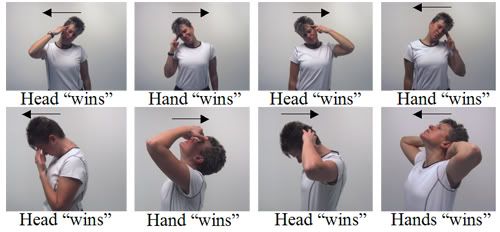
(The arrow represents the direction the head is moving and the hands are resisting, but not stopping, the movement; Use light pressure through the full ROM)

These exercises can be performed 1 to 3x/day, according to tolerance, and will increase ROM, increase strength, and build coordination, all at the same time. Feel free to contact our office for additional exercises or to answer any questions concerning you, your loved ones, or friends.

Could Neck Problems Be Affected By Your Posture?

While most of us have a look in the mirror at least once a day, few of us look at our appearance from a different angle, such as from the side. But, the view from the side can be quite revealing if you suffer from chronic neck pain.

First, note the position of your head in relation to you shoulders. Is it right above the shoulders or does it lean forward from your chest? If it does, this would be called forward head posture, and can come from a problem in your neck. Lower areas of your spine can also cause this problem. Some of us have increased our weight over the years with much of it added to our abdominal region. Because of this increased core weight, the body must counter-balance the weight gain by causing the lumbar spine to “sway- back.”

While this “sway-back” problem can create pain this the lumbar spine, it can also have far reaching effects in the posture of the neck. Usually someone with a protruding stomach and sway back will have somewhat rounded shoulders and a forward head posture. If treatment is only directed at the neck without considering how other areas may affect the stability of
the neck, then the results may be less than optimum.

In an accident, many areas of the body can potentially be injured.

Weekly Health Update – Nov 19, 2012

“Any intelligent fool can make things bigger and more complex…
It takes a touch of genius and a lot of courage to move in the opposite direction.”
~ Albert Einstein

Mental Attitude: Hope For Lonely Seniors.

Lonely, older adults with higher levels of cortisol and c-reactive protein (CRP) in their blood are at greater risk for stress and inflammation related diseases (such as diabetes, hypertension and cardiovascular disease). However, a new study has found that lonely senior citizens can decrease their cortisol and CRP levels by maintaining a positive outlook on life and by not blaming themselves for their problems.
Concordia University, October 2012

Health Alert: Fast-Tracked Drugs!

A recent study tracked a total of 434 new active substances (NASs) approved by Health Canada between 1995 and 2010. The NASs were then compared to see whether a difference in safety existed between those that had gone through Health Canada’s standard 300-day review period vs. the 180-day priority process. Drugs streamed into Health Canada’s accelerated review process are 15% more likely to be withdrawn from the market or to earn a serious safety warning.
Archives of Internal Medicine, October 2012

Diet: Happiness and Mental Health.

Happiness and mental health are highest among people who eat 7 portions of fruit and vegetables a day. Mental wellbeing appeared to rise with the number of daily portions of fruit and vegetables people consumed. Wellbeing peaked at seven portions a day. In Britain today, a quarter of the population eat just one portion or no portions of fruit and vegetables per day. Only a tenth of the British population currently consume the magic number of seven or more daily portions.
Social Indicators Research, October 2012

Exercise: Just A Few Minutes.

Participants who peddled a stationary bike as hard as possible at the highest resistance for 30 seconds, followed by 4 minutes of peddling at slow speeds with little resistance (5 rounds), burned as many as 200 calories despite only vigorously exercising for 2.5 minutes. For many people who want to be in better shape, a large chunk of time spent in an effort to work out is an annoying turn-off. This new finding could make exercise reasonable for potential fitness buffs by squeezing intense efforts into a smaller time slot.
Integrative Biology of Exercise VI meeting, October 10-13, 2012

Chiropractic: Athletes Feel The Difference.

“Were it not for Chiropractic, I would not have won the gold medal.”
~ Dan O’Brien, Olympic Gold Medalist and 3x World Champion Decathlete

Wellness/Prevention: Cherries and Gout.

Eating cherries over a two-day period reduced the risk of gout attacks by 35%.
Arthritis & Rheumatism, October 2012

Weekly Health Update – Jan 7, 2013

Weekly Health Update – Dec 31, 2012

“Those who think they have no time for bodily exercise will sooner or later have to find time for illness.”
~ Edward Stanley

Mental Attitude: Anxious Parents?

Parents diagnosed with social anxiety disorder are more likely to exhibit less warmth and affection towards their children, criticize them more, and express doubts about their child’s ability to complete a task. This can heighten anxiety in their child, and over time, can increase the chance their child will develop an advanced anxiety disorder of their own.
Child Psychiatry and Human Development, November 2012

Health Alert: Parental Math Skills and Medication Errors

Parents with poor math skills (3rd grade level or below) are 5 times more likely to measure the wrong dose of medication for their child than parents with math skills at the 6th grade level or greater. In a study of 289 parents, 27% had math skills at 3rd grade level or below.
American Academy of Pediatrics, April 2012

Diet: Red and Processed Meat.

Meat consumption increases the risk of prostate cancer. Men who consumed the most red meat had a 30% increased risk of cancer. Processed red meat was associated with a 10% increased risk of prostate cancer with every 10 grams (about one-third of an ounce) of increased intake.
American Journal of Epidemiology, October 2009

Exercise: 5 Major Reasons.

Exercise helps control your weight preventing excess weight gain or maintaining weight loss, combats health conditions and diseases, improves mood, boosts energy, and promotes better sleep.
Mayo Clinic

Chiropractic: Spinal Degenerative Joint Disease and Pain.

There are several reasons spinal degeneration causes pain: 1. Mechanical compression of nerve by bone, ligament, or the disk. 2. Biochemical mediators of inflammation. 3. Mechanical nerve compression results in decreased blood flow and swelling, which causes lack of proper motion leading to fibrotic tissue formation.
Spine, 1989

Wellness/Prevention: Get Your Sleep!

Sleep disorders lead to 253 million days of sick leave a year in the United States. 63.2 billion dollars are lost a year due to insomnia. A third of this is due to absence from work, while the other two thirds is due to a loss in productivity at work. 10% of the population suffers from insomnia. Sleep apnea affects 4-5% of the population.
University of Bergen, November 2012

Weekly Health Update – Dec 10, 2012

“So many people spend their health gaining wealth, and then have to spend their wealth to regain their health.”
~ Unknown

Mental Attitude: Reaction To Stress.

How people react to stress determines how that stress will affect their health. Study volunteers were separated in two groups: 1) those who let their troubles affect their emotional state and 2) those who didn’t let stress bother them at all. At a 10-year follow up, those who let stress affect them (group 1) were more likely to suffer from chronic health problems.
Penn State, November 2012

Health Alert: Hip Replacement and Stroke Risk.

Hemorrhagic stroke and ischemic stroke risk is ~4% higher within 2 weeks of total hip replacement surgery. A hemorrhagic stroke is brought on by bleeding in the brain, while an ischemic stroke is brought on by arterial blockage. Total hip replacement is extremely common in the United States. Around 1 million hip replacement surgeries are done around the world every year, 300,000 in the United States alone.
Stroke, November 2012

Diet: Vitamin D Levels Decreasing?

Women with health issues such as arthritis, hypothyroidism, cancer, high blood pressure, and osteoporosis are much more likely to have inadequate levels of vitamin D during seasons with decreased daylight. 28% of women had deficient levels and 33% had insufficient levels of vitamin D. Women taking supplements were able to significantly elevate their vitamin D levels.
American Society for Clinical Pathology, November 2012

Exercise: Exercise When You’re Sick?

The choice to exercise or not sometimes depends on the sickness or disease. Our bodies work harder and use more energy when we are fighting an illness. If symptoms are above the neck (sore throat, runny nose), it is probably okay to exercise. If you’re sick but still want to exercise, simply reduce your intensity and duration. You should not exercise if you have body aches, fever, diarrhea or vomiting, shortness of breath or chest congestion, dizziness or light-headedness. When resuming your regular exercise routine, try starting with 50% effort and 50% duration.
Loyola University Health System, November 2012

Chiropractic: Complexity of The Brain.

How complex is the brain? One cubic inch of brain cortex contains over 10,000 miles of connecting tissue.
Guyton’s Physiology

Wellness/Prevention: Wellness/Prevention: Staying Healthy!

“The preservation of health is easier than the cure for disease.”
~ B.J. Palmer

Weekly Health Update – Nov 26, 2012

Mental Attitude: Sleep?

Just one night of inadequate sleep can detrimentally trigger an increase (by as much as 60%) in brain activity related to anticipating negative emotional events.
UC Berkeley, October 2012

Health Alert: Stop Smoking!

Female smokers in the UK die 10 years earlier (on average) than non-smokers. However, women who stop smoking by age 30 are 97% less likely to suffer a smoking related, premature death. The Lancet, October 2012

Diet: Grapes!

Grape consumption is linked to healthier diet habits and higher intake of nutrients. Individuals who consume products made with grapes also have higher intake of the following: dietary fiber, potassium, calcium, magnesium, vitamin A, vitamin C, and vitamin B6. Grape consumption is associated with higher vegetable, whole grain, seed, and nut intake, as well as a decreased intake of cholesterol, saturated fat, and total fat, compared with adults who did not consume grape products. Grapes can assist in lowering blood pressure, strengthen blood flow, and lower inflammation in men suffering from metabolic syndrome.
Academy of Nutrition and Dietetics Food, October 2012

Exercise: Yoga

Yoga stretches all of the soft tissues of your body such as ligaments, tendons, and the fascia sheaths that surround your muscles. No matter your level of yoga, you most likely will see benefits in a very short period of time. Yoga participants had 35% improvement in flexibility after only 8 weeks.
American Council on Exercise, October 2012

Chiropractic: Why Wait?

The activities of every day living can cause micro-traumas to the musculoskeletal system. While these injuries may not result in pain, if left untreated they may lead to more serious problems such as back or neck pain (for example). Regular adjustments can help prevent these micro-traumas from becoming bigger problems in the future.

Wellness/Prevention: Keep Young Drivers Safe.

In May 2010, New Jersey implemented Kyleigh’s Law, requiring all 16-20 year old drivers with a permit or intermediate license to display a reflective decal on the front and back license plates of vehicles they are operating. The decal is intended to help police officers enforce laws specific to younger drivers such as those related to night time driving and the number of permitted passengers. Since going into effect, Kyleigh’s Law has decreased car accidents among 16-20 year old intermediate license holders by 9%. Tips for keeping your young driver safe: “[Start] them out in low-risk conditions. Keep the number of passengers to no more than one, limit nighttime driving to before 10 pm, always prohibit cell phone use while driving, and insist on seat belts for every occupant on every drive.”
Children’s Hospital of Philadelphia, October 2012

Neck and Arm Pain – The Herniated Disk?

Patients who present with neck pain along with arm numbness, pain, and/or weakness, often ask, “…what’s causing this pain down my arm?” The condition is often caused from a bulging or herniated disk pinching a nerve in the neck. The cause of this complaint can include both trauma as well as non-traumatic events. In fact, sometimes, the patient has no idea what started their condition, as they cannot tie any specific event to the onset.

The classic presentation includes neck pain that radiates into the arm in a specific area as each nerve affects different parts of the arm and hand. Describing the exact location of the arm complaint such as, “I have numbness in the arm and hand that makes my 4th and pinky fingers feel half asleep,” tells us that you have a pinched C8 nerve. This nerve can also be pinched at the elbow and make the same two fingers numb. The difference between the two different conditions is when the nerve is pinched in the neck, the pain is located from the neck down the entire arm and into digits 4 & 5 of the hand. When the nerve is pinched at the elbow, the pain/numbness is located from the elbow down to the 4th & 5th digits, but no neck or upper arm pain exists.

Examination findings usually include limitations in certain cervical (neck) ranges of motion (ROMs) – usually in the direction that increases the pinch on the nerve. Another common finding is the arm is often held over the head because there is more stretching on the nerve when the arm is hanging down and pain in the neck and arm increases. Hence, raising the arm over the head reduces the neck/arm pain. To determine where the nerve is pinched, there are a number of different compression tests that can recreate or increase the symptoms. Some compression tests include placing downward pressure on the head with the head pointing straight ahead, bent or rotated to each side. Other compression tests are performed by pressing in areas where the nerve travels such as in the lower front aspect of the neck, in the front of the shoulder where the arm connects to the chest/trunk, at the elbow and at the wrist. If there is a pinched nerve, numbness, tingling and/or pain will be reproduced when pressure is applied to these regions. Other tests include testing reflexes and muscle strength in the arm.

When a nerve is pinched, the reflexes will be sluggish or absent and certain movements in the arm are weak when compared to the opposite side. Another very practical test is called the cervical (neck) distraction test where a traction force is applied to the neck. When neck and/or arm pain is reduced, this means there is a pinched nerve. This test is particularly useful because when pain is reduced, the test supports the need for a treatment approach called cervical traction. It has been reported that the use of cervical traction when applied 3x/day for 15 minutes each, at 8-12 pounds, 78% of 81 patients reported a significant improvement in symptoms, which is very effective. Other forms of care that can be highly effective include spinal manipulation, spinal mobilization, certain exercises, physical therapy modalities, and certain medications.

How to Explain Chiropractic to Others

We cannot thank our family, friends, patients, and allied health care providers enough for referring patients to our practice.

There is no other form of advertising that attract the quality of patients that our patients refer to us.

So here’s some information that may help you tell others about us:

  • Chiropractic has been around since 1895 and is the third largest healthcare profession in the world.
  • The primary focus of treatment includes the neuromusculoskeletal system (nerves, muscles, joints) such as disk herniations (e.g., sciatica, pinched nerves), sprains and strains, sports injuries, neck pain (e.g., whiplash), headaches, and many others.
  • The treatment includes a “hands-on” approach where massage, manual traction, joint manipulation and mobilization are commonly utilized. In general, the treatment typically feels good and patients look forward to the process.
  • In many cases (such as low back pain, neck pain, headaches), chiropractic care may function as the primary or only treatment that is needed. However, when other medical conditions co-exist, the combination of chiropractic and medical treatment is often better than either one by itself (depending on the condition).
  • Doctors of chiropractic commonly refer back and forth with medical and osteopathic doctors, creating a “win-win” for the patient and providers.
  • Over the last 20-30 years, a significant volume of research has been published finding chiropractic approaches to either equal or superior to other forms of healthcare provision for low back and neck pain, headaches, and other conditions.
  • Many hospitals, medical clinics and VA facilities have integrated chiropractic into their healthcare systems. Medicare and Medicaid have included chiropractic coverage since the 1970’s and most private insurers include chiropractic coverage due to the significant volume of research reporting the benefits, cost savings, and patient satisfaction.

Your individual story may actually be the most important thing you can share.

The following are a few of the many websites that include great information about chiropractic that may also be appreciated by the potential “internet savvy” future chiropractic patient:

  1. https://www.acatoday.org/level2_css.cfm?T1ID=13&T2ID=61
  2. http://www.spineuniverse.com/displayarticle.php/article800.html
  3. http://www.chiroweb.com/find/whatischiro.html
  4. http://www.spine-health.com/treatment/chiropractic

We look forward to giving your family, friends, and co-workers the same quality care that you’ve been receiving!

Do Spinal Curves In Your Neck, Mid Back and Lower Back Affect Your Health?

Chiropractic was founded in 1895 after the hearing was restored in a patient following a spinal adjustment to the upper region of the spine.

Since then, our profession has been conducting research to help determine why spinal manipulation or adjustments work so well.

Many conditions have been studied, as well as the physiological responses to the adjustment including blood chemistry changes including hormone levels, blood pressure changes, circulation changes, and many other parameters of health.

Posture, bone alignment and spinal curves have been long been evaluated in patients presenting with muscle and joint complaints by most of the health care professions, including chiropractic.

But the question remains: how important are spinal curves in the overall health picture of the patient? Can alterations in the “normal” curve lead to future trouble or, be the cause of a current condition?

A recent study reported the results after conducting a “systematic critical literature review” where all research published on this subject was reviewed for quality and content.

They gathered 54 studies published between 1942 and 2008, which included over 20,000 patients and reported the association between the sagittal curve (curves when looking at a person from the side) and various health conditions.

There were many different types of studies and methods used to evaluate the sagittal curves of the lumbar (low back) (38 studies), thoracic (mid back) (34 studies) and cervical (neck) (6 studies) spine.

These methods included plain x-ray (25 studies), MRI (1 study), photographs (3 studies) visual analysis or, by the eye (5 studies) and those
using a variety of instruments (21 studies).

A strong association was reported in five studies with an increased angle in the midback/thoracic spine (kyphosis – sometimes referred to as “humpback”) with lung disorders causing breathing problems.

Poor physical function and pelvic organ prolapse were also strongly associated with kyphosis.

A moderate association was found when the low back curve (lordosis) was reduced, which was associated with an increase in low back pain.

Similarly, future osteoporotic midback/thoracic compression fractures were moderately associated with kyphosis or “humpback” deformity.

Kyphosis was also moderately associated with heavy household activity, uterine prolapsed and death in three other studies.

No association was found in many studies.

The conclusion of the article reports that most of the studies did not fulfill the basic requirements for this type of study or had design
flaws.

They encouraged researchers to use new/better approaches to study this association between spinal curves and health and disease.

Neck Pain Exercise Options

Exercise for the neck is very important since weak muscles are related to many painful conditions of the neck and, can contribute to fatigue, irritability, headache, sleep loss, and more. When done correctly (perform slowly, staying within “reasonable” pain boundaries), they can increase your range of motion, reduce stiffness/tightness, and strengthen your neck muscles.

The exercises below combine range of motion (ROM) against light/partial resistance in 4 directions (forwards, backwards, and L/R side bending).

To do these correctly: Similar to an arm wrestling contest:

1. Push your head into your hand while moving the head to the end of the range, “…letting the head win” (See A, C, E, G).

2. Repeat this going back in the opposite direction by “letting the hand win” (see B, D, F, H), again, moving through the entire range of motion. ALWAYS push the head into the hands, Make sure you move the head against resistance in BOTH directions, 3 times each (A-B then B-A x3; C-D then D-C x3) then, (E-F then F-E x3, and lastly, G-H then H-G, x3 reps). The trick is doing this VERY slowly (to build motor control and coordination) and to move through the entire “comfortable” range of motion.

Repeat 3x slowly. If pain worsens, lighten up on the amount of pressure used or, stop the movement just prior to the sharp pain onset. If you can’t make it to the end of the movement due to pain, make a note of how many reps it took before the onset or increase of pain and how far you could move your head. Do 3 slow reps and then move to the next exercise direction.

(The arrow represents the direction the head is moving and the hands are resisting, but not stopping, the movement; Use light pressure through the full ROM)

These exercises can be performed 1 to 3x/day, according to tolerance, and will increase ROM, increase strength, and build coordination, all at the same time. Feel free to contact our office for additional exercises or to answer any questions concerning you, your loved ones, or friends.

Could Neck Problems Be Affected By Your Posture?

While most of us have a look in the mirror at least once a day, few of us look at our appearance from a different angle, such as from the side. But, the view from the side can be quite revealing if you suffer from chronic neck pain.

First, note the position of your head in relation to you shoulders. Is it right above the shoulders or does it lean forward from your chest? If it does, this would be called forward head posture, and can come from a problem in your neck. Lower areas of your spine can also cause this problem. Some of us have increased our weight over the years with much of it added to our abdominal region. Because of this increased core weight, the body must counter-balance the weight gain by causing the lumbar spine to “sway- back.”

While this “sway-back” problem can create pain this the lumbar spine, it can also have far reaching effects in the posture of the neck. Usually someone with a protruding stomach and sway back will have somewhat rounded shoulders and a forward head posture. If treatment is only directed at the neck without considering how other areas may affect the stability of
the neck, then the results may be less than optimum.

In an accident, many areas of the body can potentially be injured.

Weekly Health Update – Nov 19, 2012

“Any intelligent fool can make things bigger and more complex…
It takes a touch of genius and a lot of courage to move in the opposite direction.”
~ Albert Einstein

Mental Attitude: Hope For Lonely Seniors.

Lonely, older adults with higher levels of cortisol and c-reactive protein (CRP) in their blood are at greater risk for stress and inflammation related diseases (such as diabetes, hypertension and cardiovascular disease). However, a new study has found that lonely senior citizens can decrease their cortisol and CRP levels by maintaining a positive outlook on life and by not blaming themselves for their problems.
Concordia University, October 2012

Health Alert: Fast-Tracked Drugs!

A recent study tracked a total of 434 new active substances (NASs) approved by Health Canada between 1995 and 2010. The NASs were then compared to see whether a difference in safety existed between those that had gone through Health Canada’s standard 300-day review period vs. the 180-day priority process. Drugs streamed into Health Canada’s accelerated review process are 15% more likely to be withdrawn from the market or to earn a serious safety warning.
Archives of Internal Medicine, October 2012

Diet: Happiness and Mental Health.

Happiness and mental health are highest among people who eat 7 portions of fruit and vegetables a day. Mental wellbeing appeared to rise with the number of daily portions of fruit and vegetables people consumed. Wellbeing peaked at seven portions a day. In Britain today, a quarter of the population eat just one portion or no portions of fruit and vegetables per day. Only a tenth of the British population currently consume the magic number of seven or more daily portions.
Social Indicators Research, October 2012

Exercise: Just A Few Minutes.

Participants who peddled a stationary bike as hard as possible at the highest resistance for 30 seconds, followed by 4 minutes of peddling at slow speeds with little resistance (5 rounds), burned as many as 200 calories despite only vigorously exercising for 2.5 minutes. For many people who want to be in better shape, a large chunk of time spent in an effort to work out is an annoying turn-off. This new finding could make exercise reasonable for potential fitness buffs by squeezing intense efforts into a smaller time slot.
Integrative Biology of Exercise VI meeting, October 10-13, 2012

Chiropractic: Athletes Feel The Difference.

“Were it not for Chiropractic, I would not have won the gold medal.”
~ Dan O’Brien, Olympic Gold Medalist and 3x World Champion Decathlete

Wellness/Prevention: Cherries and Gout.

Eating cherries over a two-day period reduced the risk of gout attacks by 35%.
Arthritis & Rheumatism, October 2012

"What is called genius is the abundance of life and health." ~ Henry David Thoreau

Mental Attitude: Cognitive Behavioral Therapy vs. Antidepressants.

Only a third of patients respond fully to antidepressant medications and there is no consensus on what to try next. In a study of 469 patients from the United Kingdom who did not fully respond to initial treatment, 235 patients again received the usual care (antidepressants) and 234 again received the usual care plus Cognitive Behavioral Therapy (CBT). CBT is a form of treatment that focuses on examining the relationships between thoughts, feelings, and behaviors to find patterns in thinking that cause negative thoughts leading to negative feelings and self-destructive behaviors. 46% of participants who received CBT as an adjunct to usual care saw improvements after 6 months compared to only 22% among those who solely used antidepressants. Those in the CBT group experienced less anxiety, were more likely to go into remission, and experienced fewer and milder symptoms than those in the other group. The Lancet, December 2012

Health Alert: Childhood Obesity Rates Falling!

During the first decade of the 21st century, childhood obesity rates among children in lower income families in the United States have decreased (14.94% in 2010 vs. 15.21% in 2003). The Journal of the American Medical Association, December 2012

Diet: Red Wine and Cancer.

Meat consumption increases the risk of prostate cancer. Men who consumed the most red meat had a 30% increased risk of cancer. Processed red meat was associated with a 10% increased risk of prostate cancer with every 10 grams (about one-third of an ounce) of increased intake. University of Leicester, December 2012

Exercise: Good Vibrations.

Within 7 months of starting a poor diet, normal mice became obese, with significant damage to their immune and skeletal systems. Daily 15-minute treatments of low-intensity vibration, barely perceptible to human touch, helped restore the immune and skeletal systems of the mice towards those of mice fed a regular diet. If this effect translates to humans, it could have benefits for obese people suffering from immune problems related to their obesity. The FASEB Journal, December 2012

Chiropractic: Quit Smoking!

Smokers suffering from spinal disorders and related back pain reported greater discomfort than those who stopped smoking during an 8 month treatment period. Patients who had never smoked and prior smokers reported significantly less back pain than current smokers and those who had quit smoking during their care. Journal of Bone and Joint Surgery, December 2012

Wellness/Prevention: Sleep and Pain?

Sleep disorders lead to 253 million days of sick leave a year in the United States. 63.2 billion dollars are lost a year due to insomnia. A third of this is due to absence from work, while the other two thirds is due to a loss in productivity at work. 10% of the population suffers from insomnia. Sleep apnea affects 4-5% of the population. University of Bergen, November 2012

Facebook Posts

Unable to display Facebook posts.
Show error

Error: Error validating application. Application has been deleted.
Type: OAuthException
Code: 190
Please refer to our Error Message Reference.

Services